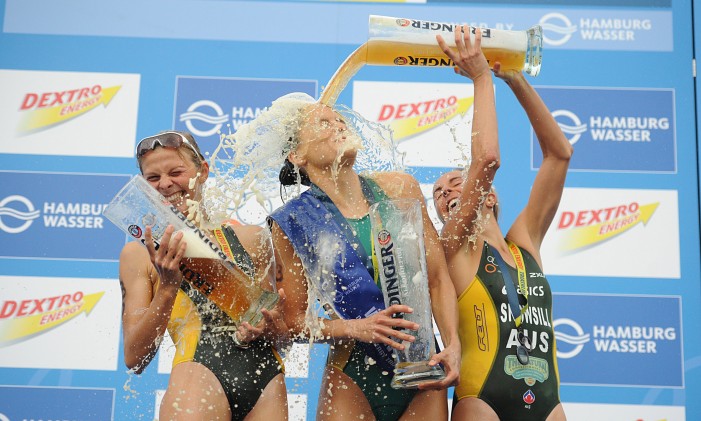
A lot of triathletes have a love-hate relationship with alcohol. We love to drink it, but hate what it does to both our bodies and training potential. But what is the truth about alcohol and should you be wary of it?
Q: What are your guidelines for drinking alcohol?
A: Research shows that in moderation, alcohol,
particularly red wine, does carry some health benefits (in wine,
it's heart-healthy antioxidants). Formal recommendations for
consumption are one drink per day for women and two for men, but
it's important to remember that everyone metabolizes and tolerates
alcohol differently. Click on the tabs on the left for some other
common alcohol-related queries I hear from triathletes.
Q: Will it make me fat?
A: Alcohol is relatively high in calories (7 calories per
gram in pure alcohol). For the athlete looking to trim body fat,
cutting out alcohol is perhaps the easiest way to achieve desired
results on the scale. However, for the triathlete who trains well
and eats well most of the time, the occasional glass won't
detrimentally affect body weight.
Q: When is the best time to have a drink?
A: Enjoying your favorite cocktail at the end of the day
can be a way to relax and help strike some life/training balance.
In fact, some of the athletes at the very top of the sport do
exactly that. For multiple Ironman 70.3 winner Kelly Williamson,
drinking a good IPA brew while cooking dinner signifies that the
day is done. "It's something I truly enjoy," she says. "I know that
practically speaking, a regular beer will not negatively affect my
training or racing. On the contrary, I think it helps me because I
would probably be grumpy and resentful of my profession if I told
myself that I couldn't have it!"
For 2010 Ironman world champion Mirinda Carfrae and her ITU World Long Course champion partner Tim O'Donnell, a bottle of good wine is a regular at the dinner table: "Tim and I enjoy a glass or two of wine with dinner a few nights per week," she says. "I don't think it takes anything away from training (unless we go for bottle number two) and, in fact, I think it helps me unwind and relax after a long day."
Q: Are post-race beers OK?
A: There are definitely drinks and snacks better suited
to promoting recovery. However, when you consider the primary goals
of recovery are to replace fluids, restore glycogen and assist in
repair, beer doesn't stack up too badly. While alcohol can be
dehydrating due to its diuretic effects, the truth is that a drink
will not dehydrate you if it provides more fluids than the rate of
diuresis. So for beer, particularly light beer, you are actually
drinking more fluids than you will expel. The carbohydrate content
of beer also helps to replace depleted glycogen. Beer's main
drawback is the lack of protein to promote tissue repair. Where one
or two finish-line beers are just fine, over-indulgence will hinder
recovery-by making you less likely to follow good recovery
practices (stretching, eating well, getting a massage).
Article reproduced from original by Pip Taylor: Alcohol and triathlon - The facts